Can a Luxury Renovation Make Your Atlanta Home Harder to Sell?
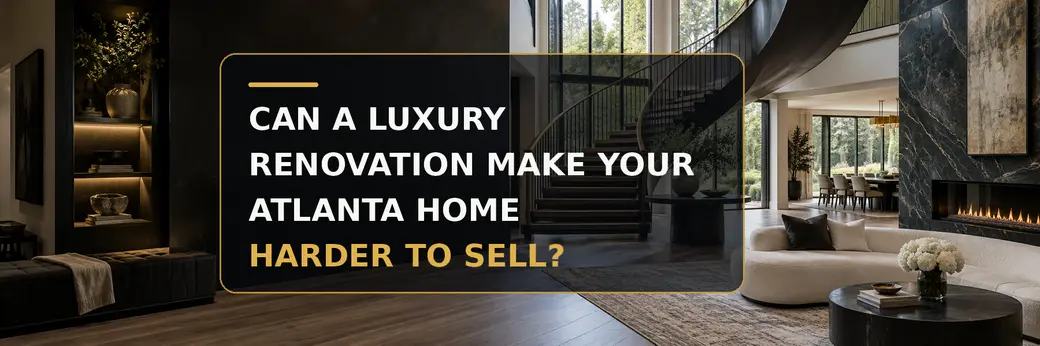
The renovation is flawless. The imported stone arrived from Italy. The lighting responds to voice commands. A former bedroom is now a dressing room that belongs in a boutique hotel.
Then the home goes on the market—and buyers admire the craftsmanship without making an offer.
This is the luxury-renovation paradox: spending more can create a more impressive home while quietly shrinking the number of people willing to buy it.
That does not mean homeowners should live in beige rooms designed for an imaginary future purchaser. But when a project changes the floor plan, removes flexibility or becomes costly to reverse, personal enjoyment and resale value begin to separate.
My view is simple: the safest luxury is not the most expensive feature. It is exceptional quality paired with broad, durable usefulness.
Atlanta buyers have enough time to be selective
The latest Atlanta data does not describe a market in which every renovated home sells on presentation alone.
Redfin reported that, during the three months ending August 2026, Atlanta homes took a median of 57 days to sell. The average home sold for about 2% below list price, and 36.7% of listings had a price drop. The median sale price was approximately $427,467, up 9.1% from a year earlier. These are citywide figures covering many property types—not a forecast for a specific luxury home. Redfin
My analysis: a polished renovation still earns attention, but buyers have room to compare. When a custom feature compromises function or creates an expensive future project, admiration can turn into a discount request.
Cost is not the same as market value
The appraisal does not reimburse the owner for excellent taste or a difficult construction process.
Fannie Mae requires appraisers to address the effect on value and marketability when a property’s design, quality, size, condition or other improvements encounter market resistance. It also states that unusual floor plans generally have limited appeal unless market acceptance can be demonstrated through comparable sales. Fannie Mae
That distinction matters in Atlanta’s varied luxury market. The appraiser looks for evidence of how buyers reacted to similar properties; the contractor’s invoice is not a comparable sale.
A $200,000 project can add substantial value. It can also add far less than $200,000—or require a buyer to calculate the cost of changing it.
Five custom choices that can narrow the buyer pool
None of these features is automatically a mistake. Each becomes risky when its cost, permanence or footprint exceeds the market’s demonstrated appetite.
1. Removing a bedroom for a highly personal use
Combining bedrooms to create a grand dressing room, gym or studio may improve daily life. It also changes the home’s functional competition.
The issue is objective utility: room count, layout, code-compliant use and the cost of restoration. If comparable homes at the same price typically offer five functional bedrooms and yours offers three plus a spectacular closet, the renovation may narrow demand.
Before removing walls, price a reversible design. Freestanding cabinetry, thoughtfully placed doors and preserved mechanical connections can protect future options.
2. Specialty rooms that consume flexible space
A theater, golf simulator, wine room or recording studio can be a powerful amenity. The risk rises when it occupies the home’s only bonus room, requires unusual ceiling or acoustic construction, or cannot be easily understood as anything else.
The best specialty spaces have a second life. A media room that can also function as a lounge has broader utility than a room built around permanently tiered seating. Luxury buyers often expect distinction; they do not all want the same distinction.
3. Technology that creates a new owner dependency
Whole-home automation can elevate daily life. It can also create anxiety when the system is proprietary, unsupported or impossible to operate without a service contract.
Retain manuals, warranties, installer contacts and a simple operating guide. Confirm that lights, thermostats and essential systems have intuitive manual controls. Technology should make the house feel effortless—not make the buyer wonder who will answer the phone when a wall panel fails.
4. Permanent finishes with a high cost to undo
Bold paint is comparatively easy to change. Book-matched stone installed across two stories, highly ornate millwork or a single-color hardscape throughout the property is not.
Distinctive design can absolutely sell a luxury home. The danger is confusing visual impact with universal value. Before committing, ask whether the feature works with the architecture, whether comparable homes support the level of finish and what removal would cost.
5. An amenity that overwhelms the lot or price point
A pool, outdoor kitchen, sport court or detached entertainment building may strengthen a property when it feels proportional and preserves usable space. It can work against resale when it consumes the yard, creates drainage or maintenance concerns, or pushes total investment well beyond nearby market evidence.
The question is whether buyers shopping this type of home have paid for the amenity in comparable transactions.
The renovations most likely to age well
Durable luxury usually makes a home easier to use: excellent natural light, thoughtful storage, a functional kitchen, quality windows, comfortable climate control, resilient materials, updated systems and flexible spaces.
Documentation adds another layer of value. Permits, plans, warranties, finish schedules and service records help a future buyer understand what was done. Fannie Mae’s guidance requires an appraiser who identifies an unpermitted addition to comment on the work’s quality, appearance and market impact. Uncertainty does not automatically erase value, but it makes the value story harder to defend.
Use the three-return test before renovating
Before signing a major construction contract, evaluate three different returns.
Lifestyle return
How materially will the project improve your life, and how many years do you expect to enjoy it? A modest resale recovery may be perfectly acceptable after a decade of meaningful use.
Reversibility return
Could a future owner adapt the space without demolition, structural changes or a second major budget? Flexibility is a form of value.
Market return
What do recent local sales suggest buyers have paid for similar quality, layout and amenities? Fannie Mae’s adjustment guidance says comparable-sale adjustments must reflect market reaction. The evidence may support a premium, but it should not be manufactured from construction cost alone. Fannie Mae
If the project succeeds only when the next buyer shares your exact preferences, treat it as a lifestyle purchase—not an investment forecast.
Selling a highly customized Atlanta home
Do not automatically strip out every distinctive choice before listing. The feature that narrows one audience may strongly attract another.
Instead, identify the property’s true competitive set, obtain realistic estimates for obvious reversions and present alternative uses where they are credible. Organize permits and records. Explain complex systems clearly. Price from market evidence rather than the renovation total.
Marketing and buyer guidance should focus on objective property characteristics, costs and uses—not assumptions about the people who belong in a neighborhood or home. That discipline supports Fair Housing compliance and better decision-making.
The bottom line
A luxury renovation can make an Atlanta home more beautiful, more personal and more enjoyable. It can also make the property harder to compare, harder to appraise and more expensive for the next owner to adapt.
The goal is not to eliminate personality. It is to spend deliberately: protect function, preserve options and understand which portion of the investment is for your life now versus the market later.
If you are considering a major renovation—or preparing to sell a highly customized property—Jules Harper and The Four Walls Group can help you study the relevant market, pressure-test the value story and position the home with clarity.
The most enduring luxury is not excess. It is a home that feels exceptional without becoming difficult to own next.
Categories
Recent Posts